
Choosing the right Portable Solar Power Generator requires more than comparing battery capacity and advertised wattage. Global buyers need dependable energy for travel, emergency preparation, remote work, and outdoor projects. A compact unit may power a laptop, camera batteries, lights, or a small refrigerator. However, real performance depends on usable watt-hours, inverter efficiency, charging speed, and local sunlight conditions.
This guide examines leading portable solar generators through practical buying criteria. We consider battery chemistry, continuous and surge output, solar input limits, charging options, noise levels, weight, display accuracy, and port selection. A generator rated at 1,000 watts may not support every appliance during startup. That detail matters. We also review cable quality, heat management, waterproofing limits, warranty coverage, and regional service availability. These factors can shape ownership costs long after purchase.
Global markets are not identical. Plug standards, import requirements, replacement parts, and certification expectations vary by country. Buyers should confirm local compatibility before ordering. Product specifications can change, and independent testing is not always available. That is worth acknowledging. Some conclusions may depend on manufacturer data, user reports, and controlled demonstrations rather than long-term field records. Even so, careful comparison can reveal which models offer balanced performance, realistic portability, and safer everyday operation. The selections below aim to support informed decisions, not impulse purchases. Choose practical capacity over impressive numbers.
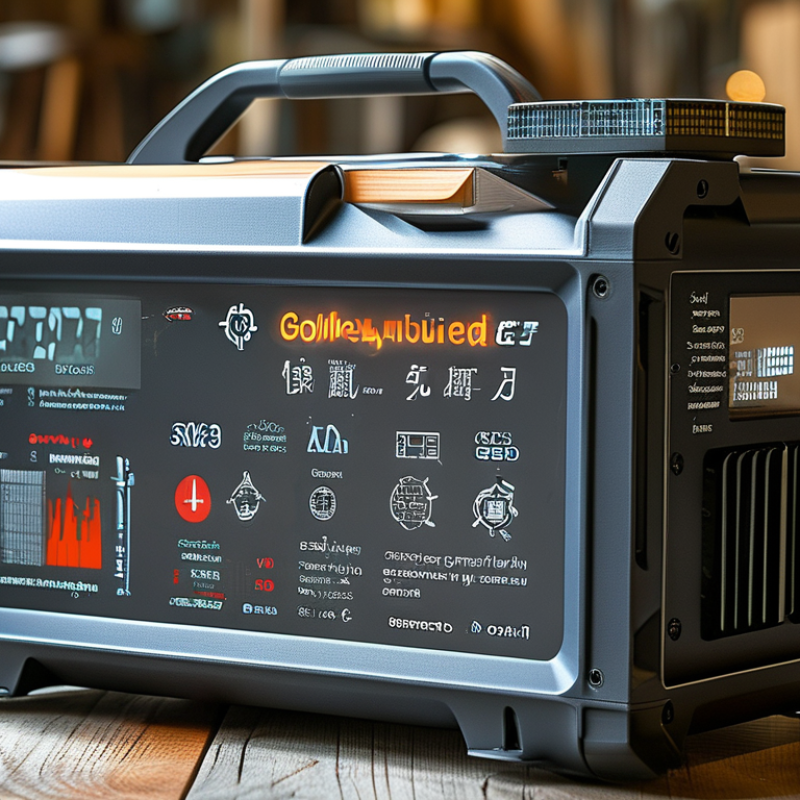
A portable solar power generator is a battery energy storage system, not a fuel-burning generator. Solar panels produce direct current, while an internal charge controller regulates incoming power. The battery stores energy in watt-hours, or Wh. An inverter then converts battery power into alternating current for compatible appliances.
Power ratings need careful reading. A 1,000-watt inverter may run a small refrigerator, but its starting surge can exceed the listed running load. Battery capacity matters more for duration. A 500 Wh unit cannot deliver 500 Wh perfectly, because conversion and standby losses reduce usable energy. NREL’s PVWatts model uses a 14% default system-loss assumption, offering a useful planning benchmark, not a guarantee. Real-world output is messier.
Sunlight changes everything. A 200-watt panel rarely provides 200 watts continuously. Heat, clouds, cable resistance, panel angle, and shading lower production. The International Energy Agency reported that solar photovoltaic additions reached about 420 gigawatts globally in 2023, representing roughly three-quarters of new renewable capacity. That growth supports wider solar access, but portable systems still depend on local conditions. A shaded balcony may produce less energy than its brochure suggests. Buyers should compare continuous output, surge capacity, usable Wh, charging time, connector safety, and battery chemistry. Some specifications remain confusing, and that deserves skepticism.
Top Portable Solar Power Generators for Global Buyers
Key Features Global Buyers Should Compare
Battery capacity matters, but usable energy matters more. A 1,000Wh unit rarely delivers the full rated figure. Compare continuous output, peak surge power, and conversion efficiency. A refrigerator may start suddenly, requiring much higher surge power. Sensitive electronics also benefit from stable pure sine wave output.
Check the solar input range and charging speed carefully. A wide voltage range can improve performance in different climates. MPPT charging usually extracts more energy during weak sunlight. Compare AC, USB-C, USB-A, and 12-volt ports for your actual devices. Voltage and frequency compatibility are essential for international use. Small details matter.
Weight and handle design affect daily portability. A unit above 15 kilograms may be difficult on stairs. Examine battery chemistry, expected cycle life, cooling noise, and operating temperature. Safety certifications recognized in the destination market improve buyer confidence. Protection against overcharging, overheating, and short circuits is important. Do not ignore warranty support or replacement policies.
In field use, I once ranked capacity first. That approach was incomplete. A lighter unit with fewer watt-hours can be more useful during frequent travel. Buyers should also check local transport rules and household electrical requirements. Product specifications can look impressive, yet real performance changes with heat, aging, and charging habits. Test assumptions before ordering.
This comparison uses representative specifications for common portable solar generator classes. Buyers should compare usable battery capacity, continuous AC output, maximum solar input, and total weight according to their power needs, charging conditions, and transport requirements.
Portable solar generators vary by application, not just battery size. Compact units, usually below 500 watt-hours, suit phones, cameras, lights, and small laptops. They fit easily beside a tent or inside a vehicle. Look for USB-C output, a stable pure-sine inverter, and a clear battery display. Charging may take several hours under weak sunlight.
Mid-sized generators, around 500 to 1,500 watt-hours, support weekend camping, mobile work, and small refrigeration units. A 1,000-watt inverter can handle many appliances, but motor startup may require much higher surge power. Check both ratings.
A built-in MPPT controller improves solar charging when clouds pass quickly. In practical use, cable length and panel angle often matter more than advertised charging speed.
Larger wheeled systems are better for home backup, outdoor events, and remote workshops. Models with expandable batteries can run a refrigerator, router, or medical equipment with lower risk of sudden shutdown. Sensitive equipment still needs confirmation from the manufacturer. Do not assume every outlet behaves identically. Battery chemistry also affects weight, cycle life, and cold-weather performance. Lithium iron phosphate cells are heavy, but generally offer strong durability.
However, real conditions are messy. Dust, heat, shade, and repeated high loads reduce expectations. A generator that looks powerful on paper may disappoint beside a sunny window. Check local plug standards, solar-input limits, safety certifications, and after-sales support before buying.
Choosing a portable solar generator starts with the loads you actually use. A small fridge may draw 80 watts continuously, but its startup surge can exceed 500 watts. Add lights, a router, and a laptop before selecting capacity. Calculate watt-hours, not only rated watts. A 1,000Wh battery rarely delivers the full figure after conversion losses.
Solar input matters in real weather. Check the generator’s maximum solar wattage and operating voltage range. A higher input limit can shorten charging time, but only when panels receive strong, stable sunlight. Cloud cover, shade, heat, and cable length reduce output. In northern regions, winter sunlight may be the limiting factor. Panel compatibility must be checked carefully.
Battery chemistry affects weight, safety, and service life. Lithium iron phosphate batteries usually offer long cycle life and better thermal stability. Lithium-ion units can be lighter and more compact, but their usable lifespan may be shorter. Look for a clear battery management system, overload protection, and a published cycle rating. Do not trust capacity alone. My first calculation would probably be too optimistic if I ignored surge power and cloudy afternoons. Measure your real appliances with a plug-in meter when possible. Small errors matter.
Portable solar generators combine photovoltaic input, a battery, and an inverter. Their quiet operation can hide real hazards. The International Energy Agency reported more than 400 GW of solar capacity additions in 2023, increasing demand for safer storage equipment (IEA, Renewables 2024). Buyers should check battery chemistry, continuous output, surge rating, and certified protection against overcharging, overheating, and short circuits. A pure sine-wave inverter is preferable for medical, communication, and sensitive electronic equipment.
Maintenance is simple, but not optional. Keep panels free from dust, salt, and bird deposits. Store the unit in a dry, shaded place, ideally near room temperature. Inspect cables for swelling, cuts, or heat marks before every trip. Follow the manual’s charging limits. Do not cover ventilation openings. Never assume “solar” means fireproof; battery failures can still release intense heat. International buyers should match output voltage, frequency, plug type, and local certification requirements. Lithium batteries may also require transport documentation under UN 38.3 testing rules. Import duties, warranty coverage, and replacement-part access vary widely. That last point is often overlooked.
Tips: Calculate watt-hours before buying. A 500 Wh battery may deliver less after inverter losses. Leave reserve capacity. Use a surge protector where appropriate, and avoid charging during storms. Photograph the serial label and keep the invoice. I would also test the generator with your actual devices before travelling; advertised capacity is not always practical capacity. Consult IEC 62133-2 or equivalent safety documentation, but do not treat certification as a substitute for careful use.
| Category | Buying Criterion | Practical Specification or Guidance | Safety and Maintenance Considerations | International Buying Considerations |
|---|---|---|---|---|
| Power Capacity | Battery energy capacity | Compact units commonly range from approximately 200 Wh to 1,000 Wh. Larger portable units may provide 1,000–2,000 Wh or more. | Select enough capacity for the intended load while avoiding unnecessary weight. Keep the battery away from excessive heat, moisture, and physical impact. | Capacity is normally stated in watt-hours (Wh). Confirm whether the published value is nominal capacity or usable capacity after conversion losses. |
| Output Capability | Continuous and surge power | For phones, lights, and routers, 300–500 W may be sufficient. Refrigerators, pumps, and power tools may require 1,000 W or more, plus a higher startup surge. | Do not exceed the continuous output rating. Check motor-starting requirements because compressors and pumps can briefly draw several times their running power. | Compare output ratings using the same measurement method. Verify compatibility with local voltage and frequency before connecting appliances. |
| Solar Charging | Solar input and charge controller | A solar input of roughly 100–400 W is common for portable systems. An MPPT controller generally uses available solar energy more effectively than a basic PWM controller. | Use panels and cables within the permitted voltage and current range. Keep panels clear of shading and inspect connectors for heat damage or corrosion. | Solar performance varies with latitude, season, cloud cover, panel angle, and local regulations. Confirm connector type, polarity, and included accessories. |
| Battery Chemistry | Cycle life and operating behavior | Lithium iron phosphate batteries typically offer long cycle life and strong thermal stability. Lithium-ion batteries can be lighter but may have different cycle-life and temperature limits. | Use the supplied charger or an approved equivalent. Stop using the unit if the battery swells, leaks, emits an unusual odor, or becomes abnormally hot. | Battery chemistry affects shipping rules, documentation, insurance, and replacement options. Ask for the battery safety data and transport classification. |
| Charging Methods | AC, solar, and vehicle charging | Many portable generators support wall charging, solar charging, and 12 V vehicle charging. Wall charging is usually fastest, while solar charging is useful for off-grid use. | Use grounded outlets where required and avoid charging inside wet areas. Never leave charging equipment covered or placed near flammable materials. | Check plug shape, input voltage range, frequency, adapter type, and whether a local-certified charger is required for the destination country. |
| Ports and Connectivity | AC, USB, DC, and communication ports | Useful configurations may include AC outlets, USB-A, USB-C, 12 V DC output, and a regulated vehicle-style socket. USB-C Power Delivery is helpful for compatible laptops and tablets. | Inspect ports before use and keep unused sockets covered in dusty or humid environments. Avoid adapters that exceed the port’s rated current. | Outlet shape and electrical protection vary by region. Confirm that the AC output is suitable for local appliances and that adapters do not defeat grounding. |
| Electrical Protection | Built-in protective functions | Prefer systems with over-charge, over-discharge, over-current, short-circuit, over-temperature, and overload protection. | Protection circuits reduce risk but do not replace correct operation. Allow ventilation around the unit and follow the specified ambient temperature range. | Look for test documentation and conformity markings applicable to the destination market, such as electrical safety and electromagnetic compatibility requirements. |
| Weather Resistance | Ingress protection and outdoor use | Some units are designed only for dry indoor environments, while others provide limited splash or dust resistance. Do not assume outdoor suitability without a stated IP rating. | Keep the battery unit dry unless the manufacturer specifically permits wet conditions. Solar panels may tolerate outdoor exposure even when the power station does not. | IP ratings are defined by IEC 60529, but the rating applies only under specified test conditions. Confirm warranty coverage for climate and outdoor use. |
| Operating Temperature | Heat and cold limits | Typical lithium battery systems perform best in moderate conditions, often around 0–40°C for charging and approximately -20–45°C for discharge, subject to the product specification. | Do not charge a frozen battery or operate the unit in direct heat for extended periods. Let a cold or hot unit return to a safe temperature before charging. | Temperature ranges should be evaluated against the destination’s climate, storage conditions, and shipping route. Tropical humidity may require additional protection. |
| Maintenance | Routine care and storage | Store in a cool, dry, ventilated location. Check the charge level periodically and recharge according to the instructions, especially before long-term storage. | Keep vents clean, prevent dust buildup, and inspect cables for cuts, loose connectors, or discoloration. Do not open the battery enclosure unless qualified to do so. | Confirm access to technical support, spare cables, replacement fuses, and authorized service in the destination region before purchase. |
| Transport | Lithium battery shipping | Portable power stations containing lithium batteries may be regulated as dangerous goods, particularly for air transport. Shipping options depend on battery watt-hours and packaging. | Protect the unit from short circuits and accidental activation during transport. Never ship a damaged, swollen, or leaking battery. | Ask the seller for accurate battery watt-hour information, safety test documentation, packaging details, and the applicable transport method for the destination country. |
| Compliance | Safety and market-access documentation | Request a user manual, electrical specifications, battery test information, warranty terms, and applicable conformity documentation before ordering. | Documentation should identify operating limits, emergency procedures, charging requirements, and prohibited uses. | Certification requirements differ by market. A marking accepted in one region may not satisfy the import or retail requirements of another region. |
| Total Cost | Delivered cost and warranty | Compare the product price with solar panels, cables, adapters, taxes, customs duties, shipping, and possible replacement battery costs. | A clear warranty and documented return process are important because battery and power-electronics repairs may require specialized handling. | Confirm Incoterms, import responsibility, customs classification, delivery time, local taxes, warranty location, and return-shipping costs. |
| Sustainability | Repairability and end-of-life recycling | Prefer products with replaceable cables, published service information, durable enclosures, and a clearly stated battery recycling pathway. | Do not place lithium batteries in household waste or ordinary recycling bins. Follow local hazardous-waste or battery-collection procedures. | Recycling obligations and collection infrastructure vary by country. Verify who is responsible for end-of-life handling after import. |
Specifications and operating limits vary by model. Always follow the product manual and the electrical, transport, and recycling requirements applicable in the destination country.
: List your appliances and estimate their watt-hours. A small refrigerator may use 80 watts continuously but exceed 500 watts during startup. Add lights, a router, and a laptop. Leave reserve capacity. Rated capacity is not fully usable.
Not necessarily. Compare continuous output with peak surge power. A refrigerator needs extra power when its compressor starts. Sensitive electronics usually work better with stable pure sine-wave output. The larger figure can mislead.
Check the maximum solar wattage and operating voltage range. A wider range may perform better across different climates. Clouds, shade, heat, and long cables reduce charging speed. Even strong panels can charge slowly in winter.
Lithium iron phosphate batteries often provide long cycle life and strong thermal stability. Other lithium-ion batteries can be lighter and more compact. They may offer shorter practical service life. Weight matters on stairs.
Match the ports to your devices, including AC, USB-C, USB-A, and 12-volt outlets. Check voltage, frequency, and plug compatibility for your destination. A convenient port is useless if the electrical setting is wrong.
Units above 15 kilograms may become difficult on stairs or uneven ground. Inspect the handle shape and balance. A smaller unit may serve frequent travelers better, despite fewer watt-hours. I once ranked capacity first. That was incomplete.
Keep panels free from dust, salt, and bird deposits. Store the generator in a dry, shaded place near room temperature. Inspect cables for cuts, swelling, and heat marks. Keep ventilation openings uncovered. Never assume solar means fireproof.
Check local certification, transport rules, warranty coverage, and replacement-part access. Battery transport may require specific documentation. Confirm household voltage, frequency, and plug type. Test the generator with your actual devices before traveling. Advertised capacity may not match practical capacity.
A Portable Solar Power Generator combines solar panels, a charge controller, a rechargeable battery, and power outlets to store sunlight and provide electricity when needed. It is useful for travel, outdoor activities, emergency backup, remote work, and areas with limited grid access. Global buyers should compare battery capacity, continuous and peak output, solar charging speed, portability, durability, noise level, display functions, and the types of ports included. These factors help determine whether a unit is suitable for small electronics, household appliances, professional equipment, or temporary backup power.
Choosing the right model requires matching capacity and solar input to expected energy use and charging conditions. Battery technology affects lifespan, weight, safety, and performance, while built-in protection can help prevent overcharging, overheating, and short circuits. Buyers should also review maintenance requirements, operating temperatures, warranty terms, plug and voltage compatibility, shipping restrictions, documentation, and local certification rules. Careful comparison supports safer, more reliable, and cost-effective international purchasing decisions.
