
10 Tips for Choosing a Battery Generator for Home?

Time:2026-09-15 Author:Aria
0%

A power outage rarely arrives at a convenient time. It may stop a refrigerator, silence a Wi-Fi router, or leave a medical device without backup power. The U.S. Energy Information Administration reported that American electricity customers experienced an average of about 5.5 hours of interruptions in 2022, including major events. That figure makes household resilience more than a comfort issue.

A Battery Generator For Home can provide quiet, locally stored electricity without gasoline fumes or routine engine maintenance. However, choosing one requires more than comparing watt-hours on a product page. Battery chemistry, usable capacity, continuous output, surge performance, charging speed, noise, and safety certifications all affect real performance. The International Energy Agency’s Batteries and Secure Energy Transitions report highlights continued improvements in battery technology, while also noting the importance of supply chains, safety, and responsible deployment.

In practical terms, a 1,000-watt-hour unit may run a router, several lights, and a small refrigerator for a limited period. It may not support an electric heater, well pump, or induction cooker simultaneously. That difference matters.

No checklist is perfect.

These ten tips connect technical specifications with everyday decisions, such as storing the unit in a dry room, checking its weight, and testing backup loads before an emergency. Manufacturer claims still require careful interpretation. Runtime estimates can change with temperature, battery age, and appliance startup demand. A reliable choice is therefore not always the largest model. It is the model that safely matches your essential loads, charging options, budget, and household habits.
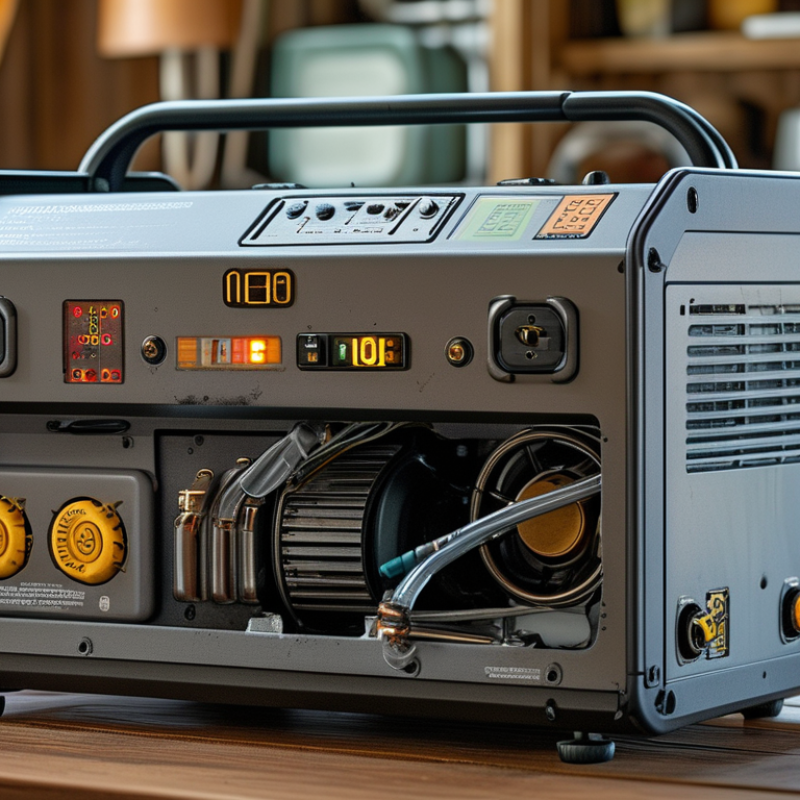
10 Tips for Choosing a Battery Generator for Home?

Define Your Home’s Essential Power Requirements

Before buying a battery generator, define what must stay on during an outage. The U.S. Energy Information Administration’s 2020 Residential Energy Consumption Survey reports average household electricity use near 10,632 kilowatt-hours annually. That figure includes comfort loads, not just essentials. Heating, cooling, and electric water heating can dominate demand. They may quickly exhaust a small battery.

Write a practical outage list beside your electrical panel. Include a refrigerator, several LED lights, internet equipment, a phone charger, and a sump pump if needed. Record each device’s running watts and starting surge. Add the running watts, then multiply by expected hours. A 150-watt refrigerator running for eight hours needs about 1,200 watt-hours, before startup losses and conversion inefficiency. The U.S. Department of Energy recommends checking appliance labels and measuring uncertain loads rather than guessing. Guessing is easy. It is often wrong.

The Federal Emergency Management Agency advises households to plan for essential equipment and outage duration, not normal daily consumption. Leave headroom of roughly 20 to 30 percent for surges, cold temperatures, and battery aging. Keep high-demand appliances off the list unless the system can support them safely. A microwave, heater, or pump can change the calculation dramatically. I would review the list after one real outage; assumptions look different when the refrigerator is warm and the room is dark.

Compare Battery Capacity, Output, and Runtime

Choosing a battery generator for home starts with three numbers: capacity, output, and runtime. Capacity, measured in watt-hours, shows how much energy it stores. A 1,000Wh unit may run a 100W refrigerator for roughly eight hours, not ten, after inverter losses. Output describes the electricity delivered continuously. Compare this rating with your largest appliance. A refrigerator may use modest power while running, but its compressor can demand a sharp starting surge. Ignore that detail, and the generator may shut down.

List the appliances you truly need during an outage. A small refrigerator, router, medical device, and a few LED lamps create a more realistic load than every appliance in your kitchen. Add their running watts, then leave headroom for startup demands. In practical home testing, actual runtime often falls below the advertised figure. Heat, cold, battery age, and conversion losses all matter. Marketing numbers are not field measurements.

Use this simple estimate: runtime equals usable watt-hours divided by total watts. A 1,500Wh battery powering 250W may provide about five hours after normal losses. Check whether the specification uses total or usable capacity. That difference can be easy to miss. Recharge time matters too, especially after a long outage. Solar input can help, but cloudy weather may reduce it sharply. I would also inspect cooling noise, display accuracy, cable quality, and warranty terms. Some choices look efficient on paper, yet feel inconvenient beside a bedroom bed.

Choose the Right Battery Chemistry and Recharge Options

Battery chemistry determines how confidently a home generator performs during a long outage. Lithium iron phosphate, or LFP, generally offers strong thermal stability and a long cycle life. The International Energy Agency reported that LFP batteries represented about 40% of the global electric-car battery market in 2023. It also noted that LFP cells cost nearly 30% less per kilowatt-hour than nickel-manganese-cobalt cells. That cost advantage can benefit home storage. However, LFP usually stores less energy by weight. A larger unit may be necessary for refrigerators, pumps, and medical equipment.

Recharge speed matters just as much. A wall outlet is predictable, but high charging power can increase heat and shorten service life if cooling is poor. Solar charging is quieter and useful during extended outages. Yet cloudy weather, panel angle, and shading reduce the actual input. The National Renewable Energy Laboratory’s PV performance guidance emphasizes that real solar output varies with location, temperature, and system losses. Plan with conservative numbers. Car charging can provide flexibility, but it is usually slower and should not replace a proper household circuit.

Check the battery’s usable capacity, not only its advertised capacity. Some energy remains reserved for protection. I initially underestimated this difference. That was a poor assumption. Look for published cycle-life tests, operating-temperature limits, and independent safety certification. Also confirm whether solar input uses a suitable charge controller. A technically impressive generator can still disappoint beside a shaded window.

10 Tips for Choosing a Battery Generator for Home

Choose the Right Battery Chemistry and Recharge Options

Typical full-cycle life varies with temperature, charging speed, depth of discharge, and maintenance. The ranges below are general industry estimates rather than product specifications.

Battery chemistry

Lithium iron phosphate batteries commonly offer long cycle life and strong thermal stability. NMC batteries usually provide higher energy density in a compact form. Lead-acid batteries cost less initially but typically have a shorter service life when deeply discharged.

Recharge options

AC wall charging is the most predictable option. Solar charging can reduce grid dependence but varies with sunlight and panel size. Vehicle charging is useful during outages when the generator supports the required DC input and cable protection.

Home-use checklist

Compare usable watt-hours, continuous and surge power, recharge time, operating temperature, noise, warranty terms, and the protection system before choosing a battery generator.

Evaluate Portability, Noise, Safety, and Maintenance

10 Tips for Choosing a Battery Generator for Home

Portability starts with real movement, not the product description. Check the unit’s weight, handle design, and wheel quality before buying. A generator that is easy to lift downstairs may become awkward across gravel or wet grass. Measure your storage space, too.

Weight matters. Choose enough capacity for essential devices, but avoid carrying oversized equipment for small needs. Confirm the wattage of your refrigerator, router, medical equipment, and lights before making a decision. A short runtime can become frustrating during a long outage.

Noise affects sleep, work, and family comfort. Compare operating decibel ratings, but remember that testing conditions vary. Place the generator away from bedrooms and walls when practical. Some homes may need a quiet model for nighttime use.

Silence is valuable. Safety deserves stricter attention than convenience. Follow the manual, keep cables dry, and inspect plugs for heat or damage. Use only approved connections, and ask a qualified electrician about home circuits or transfer equipment. Never guess with electrical loads.

Maintenance is simple, but neglect is common. Check charge levels periodically, especially before storm season. Store the unit in a cool, dry place, away from direct sunlight and moisture. Clean vents carefully so dust does not restrict cooling.

Read the manual. Battery capacity may decline with age, even when the unit looks perfect. I would also leave room in the budget for cable replacement or professional inspection.

My own caution is practical: the most powerful option is not always the best household choice. A manageable, quiet, and well-maintained unit is often used more reliably.

Check Compatibility, Expandability, Warranty, and Total Cost

10 Tips for Choosing a Battery Generator for Home

A battery generator should match your home’s actual electrical needs, not an imagined emergency. List essential devices, including a refrigerator, router, medical equipment, and several lights. Record each device’s running watts and starting surge. Then compare those figures with the generator’s continuous and peak ratings. Measure twice. A unit may power a heater briefly but fail when the refrigerator starts. Check outlet types, voltage, charging plugs, and transfer-switch compatibility before buying. A licensed electrician should inspect any connection to household circuits.

Expandability can protect your budget as needs change. Look for compatible extra batteries, solar charging, and safe parallel operation. Confirm whether expansion requires matching battery ages or specific modules. That detail is easy to miss. Test the expected runtime with realistic loads, rather than relying only on the largest capacity figure. More capacity also means more weight, storage space, and charging time.

Warranty terms deserve careful reading. Check coverage length, battery-cycle limits, repair procedures, and exclusions for storage damage or unsuitable charging. Keep receipts and record the purchase date. The total cost includes the generator, expansion batteries, cables, solar equipment, maintenance, and eventual battery replacement. A cheaper model may cost more after accessories and service are included. I would also consider noise, indoor storage temperature, and handling weight. In practice, an excellent specification can become inconvenient when the unit sits unused for months. A monthly test run may reveal that weakness early.

10 Tips for Choosing a Battery Generator for Home? - Check Compatibility, Expandability, Warranty, and Total Cost

No. Decision Dimension What to Check Practical Benchmark or Calculation Why It Matters
1 Continuous and Surge Output Add the running wattage of the appliances that may operate at the same time. Also check the starting surge of refrigerators, pumps, compressors, and other motor-driven equipment. Choose continuous output at least 20% above the planned running load. For motor loads, verify the generator's surge rating and duration rather than relying only on peak watts. Insufficient continuous or surge power can cause shutdowns, overload protection, or failure to start essential appliances.
2 Usable Battery Capacity Compare usable watt-hours, not only the advertised battery capacity. Confirm whether the stated capacity is measured before inverter losses and reserve limits. Estimated runtime = usable Wh ÷ appliance load in W. Example: 1,000 usable Wh ÷ 100 W ≈ 10 hours before allowing for changing loads and conversion losses. Capacity determines how long essential devices can run during an outage; higher wattage reduces runtime quickly.
3 Home Appliance Compatibility Check output voltage, frequency, receptacle type, grounding method, and whether the unit provides a pure sine-wave output. For sensitive electronics, medical equipment, variable-speed motors, and modern appliances, confirm that the output specification matches the equipment requirements. Electrical mismatch or unsuitable waveform quality may cause malfunction, nuisance alarms, or equipment damage.
4 Transfer-Switch and Wiring Safety Determine whether the unit is intended for individual appliances, a dedicated inlet, or connection to selected household circuits through a transfer switch. Never energize household wiring through a normal wall outlet. A permanent circuit connection should use correctly rated equipment installed by a qualified electrician. A proper transfer arrangement helps prevent backfeeding, protects utility workers, and reduces fire and shock risks.
5 Expandability Check whether additional battery modules are supported, the maximum expandable capacity, connection method, and whether expansion batteries must match the original system. For future growth, select a system with documented expansion limits and a battery-management system designed for parallel operation. Expandable storage can reduce the need to replace the entire unit when backup-duration requirements increase.
6 Recharge Speed and Input Options Review wall-charging time, solar-input voltage and current limits, vehicle charging support, and whether multiple charging methods can be used safely. Approximate charging time = battery Wh ÷ charging watts. A 1,000 Wh battery receiving 500 W may require roughly 2 hours plus charging losses and the final charging phase. Faster and more flexible recharging improves readiness when grid power is intermittent or unavailable for several days.
7 Battery Chemistry and Service Life Identify the battery chemistry, stated cycle-life test conditions, usable depth of discharge, storage temperature range, and replacement procedure. Do not compare cycle counts without checking the capacity-retention target and test conditions. Heat, deep discharges, and long periods at full charge can reduce service life. Battery longevity affects reliability and the long-term cost of ownership.
8 Warranty and Support Read the warranty period, battery-specific coverage, cycle or throughput limits, exclusions, shipping responsibility, repair process, and availability of replacement parts. A longer warranty is useful only when its terms cover the battery, inverter, and expected operating conditions. Keep the receipt and register the product if required. Clear support terms reduce financial risk if the battery loses capacity or the inverter develops a fault.
9 Total Cost of Ownership Include the main unit, expansion batteries, solar panels, cables, transfer switch, installation, maintenance, replacement battery, and electricity used for charging. Total cost = purchase price + accessories + installation + expected replacement costs − resale or warranty value. Compare cost per usable Wh when evaluating storage options. A lower purchase price may become more expensive if it requires extra hardware, has limited capacity, or has a short service life.
10 Noise, Portability, and Operating Environment Check weight, handles or wheels, fan noise in decibels, ventilation clearance, operating temperature, indoor-use restrictions, and protection against moisture. Battery generators produce no exhaust during operation, but they still need adequate ventilation for heat removal. Keep them dry and follow the specified temperature and clearance limits. A unit that is too heavy, loud, hot, or difficult to position may be impractical during a real emergency.

Note: Ratings, runtime, charging performance, warranty terms, and safety requirements vary by model and region. Always confirm the current technical documentation and local electrical regulations before purchase or installation.

FAQS

Which household devices should a battery generator power during an outage?

Prioritize the refrigerator, LED lights, internet equipment, phone chargers, and essential medical devices. Keep comfort appliances off unless capacity allows.

How can I estimate the required battery capacity?

Multiply each device’s running watts by expected operating hours. A 150-watt refrigerator running eight hours needs about 1,200 watt-hours. Allow extra capacity for startup losses and conversion inefficiency.

Why should I check starting surge requirements?

Some appliances briefly demand much more power when starting. A refrigerator may run at 150 watts but surge higher initially. A small unit can fail suddenly.

How much extra capacity should I keep?

Leave roughly 20 to 30 percent headroom. This covers surges, cold temperatures, and battery aging. More is safer, though heavier.

Can one battery generator power a heater or microwave?

It might, but these appliances can consume substantial power. Check continuous and peak ratings carefully. A heater may drain the battery quickly.

What compatibility details should I check before buying?

Check outlet types, voltage, charging plugs, and transfer-switch compatibility. Household circuit connections should be inspected by a licensed electrician. Never assume compatibility.

Is expandable storage useful for changing power needs?

Extra batteries and solar charging can extend useful capacity. Confirm matching battery ages and required expansion modules. Expansion adds weight, space, and charging time.

What warranty details deserve attention?

Review coverage length, battery-cycle limits, repair procedures, and storage exclusions. Keep the receipt and purchase date. Small details matter.

What is the real total cost?

Include the generator, extra batteries, cables, solar equipment, maintenance, and future battery replacement. A cheaper unit may become expensive after accessories and service. My first estimate might be too optimistic.

How should I test the system after purchase?

Run realistic loads, such as a refrigerator, router, and two LED lights. Test it monthly, and record runtime. One real outage may expose weak assumptions.

Conclusion

Choosing the right Battery Generator For Home starts with identifying which appliances and devices must remain powered during an outage, such as refrigerators, medical equipment, lights, communication devices, or heating systems. Estimate their combined wattage, startup demands, and expected usage time before comparing models. Pay attention to battery capacity, continuous and peak output, and realistic runtime rather than relying only on advertised figures. Battery chemistry also matters because it affects lifespan, weight, charging speed, and performance. Consider whether the unit can recharge through wall power, solar input, or a vehicle connection.

A practical home generator should also match your lifestyle and storage space. Evaluate portability, operating noise, ventilation needs, built-in safety protections, and the level of maintenance required. Check whether extra battery modules can extend capacity, whether the outlets support your essential equipment, and whether the warranty provides meaningful coverage. Finally, compare the complete cost, including charging accessories, expansion options, and long-term battery replacement, to choose a reliable and cost-effective emergency power solution.

Aria

Aria

Aria is a dedicated marketing professional with a deep passion for innovative strategies and a keen understanding of our company's product offerings. With a wealth of experience in the industry, Aria excels at crafting engaging content that highlights the unique features and benefits of our......